



Advanced Certificate · ICF PCC

You know what a great team can achieve. Learn to coach leaders and teams in 24 weeks.

A 24-week, 175-hour executive coaching program for senior leaders, built to the ICF PCC markers. Two live sessions a week, alongside your current role, in a cohort of 6 to 8.

ICF Level 1 Accredited Coaching EducationICF Professional Coaches memberInternational Coaching Federation
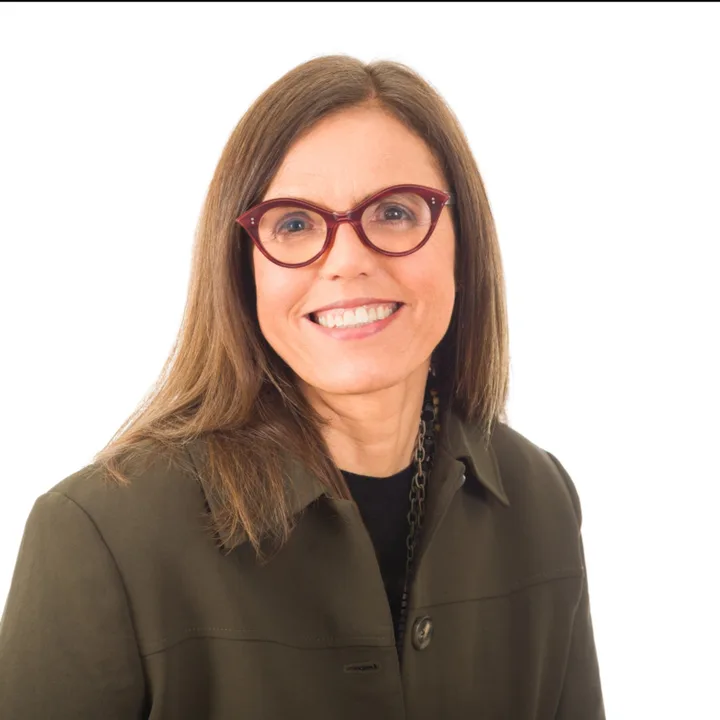
Fabiana Pereira Hotz, PCC
  • Dominique Bel, PCC
  • Louise Kovacs, MA, PhD
  • Thomaz Meirelles, MBA, MSM
  • Lisa Dickson
  • Oren Shai

You learn from people who coach senior leaders every week. They teach what they practice.

StartWeeks 1–12 · Both programsWeek 12Professional Certificate (ACC)Weeks 13–24 · Coaching teams and systemsWeek 24Advanced Certificate (PCC)StartWeeks 1–12Both programsWeek 12Professional Certificate (ACC)Weeks 13–24Coaching teams and systemsWeek 24Advanced Certificate (PCC)

Both programs share the same first 12 weeks. The Advanced Certificate then builds on that foundation with 12 further weeks focused on coaching teams and systems.

Capabilities

What you'll be able to do in 24 weeks

How you learn it

From week 13 you coach a live team case with your cohort of 6 to 8: contracting with several parties at once, building trust in a group, listening to many voices at the same time, and diagnosing what the team is ready to confront. Facilitating a good meeting is the smaller skill.

  1. Coach the dynamics that shape a team’s performance

    How you learn it

    From week 13 you coach a live team case with your cohort of 6 to 8: contracting with several parties at once, building trust in a group, listening to many voices at the same time, and diagnosing what the team is ready to confront. Facilitating a good meeting is the smaller skill.

  2. Address the structural causes of recurring friction

    How you learn it

    You learn to read the operating and relational loops that decide what a team can trust, decide and carry out together, and to work on the loop rather than the symptom, so the friction stops needing management.

  3. Work with power and conflict in the room

    How you learn it

    You gauge how far a team has developed in the way it handles power, authority and influence, and where it has room to grow. Then you practice staying useful inside an executive team's conflict, and naming the specific thing that stops it from setting a harder goal and reaching it.

  4. Establish ways of working the team can sustain

    How you learn it

    Governance, accountability routines, role clarity and sponsor relations, then coaching through disruption. Throughout, your coaching is observed and reviewed against the The behaviors an ICF assessor looks for at the Professional Certified Coach level: the same eight competencies as the ACC, judged to a higher standard, such as whether the coach works with the client's whole situation rather than the problem as first stated., with written feedback on what to practice next.

Plus everything the Professional Certificate builds in weeks 1 to 12.See the Professional capabilities

Format

What a week looks like

Live sessions

4 to 5 hours

a week, live online

  • Two sessions a week: 2.5 hours each in weeks 1 to 12, 2 hours each from week 13
  • You coach and get coached in every session, with your cohort of 6 to 8
  • Attend at least 80% of sessions

Tuesdays and Thursdays, 12:00 – 2:30 pm ETAmericas hours · next start October 20, 2026
Self-paced

1 to 4 hours

a week, on your own time

  • A library of 100+ audio and video episodes
  • Each covers the ideas before a live session, so live time goes to practice
  • Listen on your phone or computer, on the go
  • Transcripts and takeaways to download
Hear a sample session
Read the transcript

How Adults Actually Develop

Robert Kegan’s research establishes that growth is not about increasing the quantity of knowledge one has, but the quality of their understanding. In other words, it is a fundamental change in how a person makes meaning.

Using a structured interview instrument administered across thousands of adults over decades, he mapped how meaning-making structures develop across the lifespan and established that the developmental phases and transitions are real, describable, and identifiable. His model identifies five stages, or orders of mind. The first one starts at birth, and very few adults ever reach the last one. The movement between them reflects considerable and effortful shifts in the architecture of both self-functioning and identity.

The Subject-Object Shift

At any stage of development, some elements of perception are held as subject and others as object:

  • Subject: What a person is subject to: elements of their life they cannot see, examine, or choose. They are so embedded in it that they become effectively part of that person’s identity.
  • Object: What one holds as object can be seen, examined, and decided upon. They have it; it does not have them.

The Fish in Water Analogy: Fish cannot see water because water is not an object in the fish’s world. It is their medium of existence itself, part of how they are. Development is the moment the fish sees the water.

When something previously subject becomes object, the framework a person was embedded in becomes something they can stand outside and evaluate. The identity structure they were defined by becomes something they can, as needed, revise their relationship with.

Development is inherently uncomfortable. It requires losing the ground one was standing on before finding new ground. The transition is so destabilizing that it cannot be forced by instruction alone.

The Holding Environment

Kegan’s most directly relevant finding for coaching is the concept of the holding environment. It has three simultaneous properties:

  • Confirmation: The person is seen and held at their current stage. Without it, they protect rather than explore.
  • Contradiction: The environment creates genuine encounters with the limits of the current stage through situations that cannot be navigated from within the current structure. Contradiction without confirmation destabilizes without developing; confirmation without contradiction is maintenance, not growth.
  • Continuity: The environment remains stable across the transition, allowing the person to let go of the old structure before the new one is fully formed.

Note: The holding environment is not a singular event. It is a sustained relationship that holds all three properties simultaneously over time (Confirm, Contradict, Continue).

How Systemic Depth Coaching Enables Development

Beneath every presenting problem is a system: an external one made of incentives, relationships, and dynamics, and an internal one made of assumptions, values, identity pressure, and interpretive defaults.

Systemic depth coaching works on both simultaneously, and on the relationship between them. What the coach holds is never a problem to be solved, but always the client’s position within this combined, interconnected system. Each coaching session helps the client see the system they are embedded in, including the assumptions they are subject to, and facilitates a point-of-view shift in how they are positioned within it.

This is the subject-object shift enacted in a real leadership context, with real-life stakes. The move from subject to object, from being shaped by the system to being able to examine and choose how to relate to it, is precisely how adults grow from one developmental stage to the next.

From this point of view, systemic depth coaching is not merely a technique that supports this process. At its best, it is the process. For this to work, the coach must have made enough of the same journey to recognize the terrain. A coach who cannot see their own water cannot help a client see theirs.

Coaching Reflections
  • What in your current practice feels so natural, so assumed, that you have never examined it as a choice?
  • What might it look like to hold that as object rather than subject?
  • Think of a client or person you have tried to support who remains stuck despite genuine insight. Looking at the three conditions of the holding environment, which one was missing?
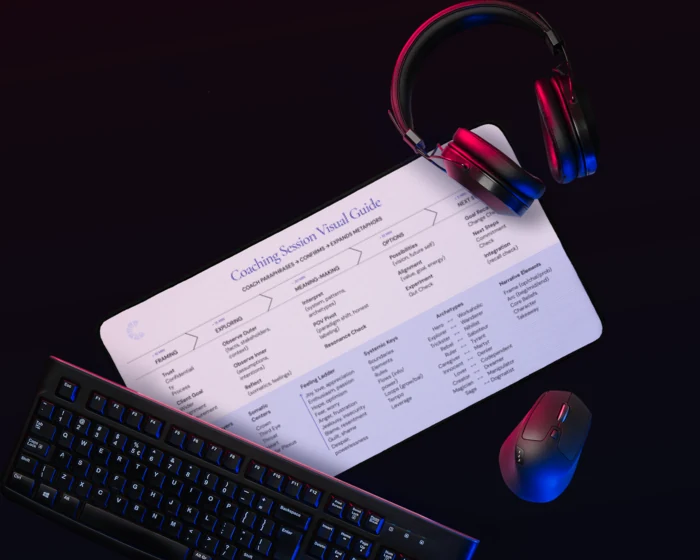
A Claristrat desk mat printed with the Coaching Session Visual Guide, shown on a desk with a keyboard, mouse and headphones.

The toolkit

What stays on your desk

  • Printed deskpads with your session and engagement flows
  • Bio templates, contracting checklists and rate benchmarks for your practice
Curriculum

What you learn, week by week

Six modules in three blocks of four weeks, after the 12 weeks you share with the Professional cohort. Each one gives you something you can use with a team.

Weeks 1–12

The Professional curriculum

Modules 1 to 6: coaching one leader to the ICF standard, from the first agreement to lasting change. You take them in the same cohort as the Professional Certificate.

  1. Weeks 13–16Advanced Threshold

  2. Weeks 17–20Systemic Decoding

  3. Weeks 21–24Collective Design

Alumni experience

The program was incredible and I would recommend it to anyone who wants to advance their coaching skills. Fabiana is an outstanding leader and coach.

Esther BenzieCEO, Canadian Marketing Association · Brand and Advertiser Executive · Board DirectorLinkedIn
After Claristrat

Four steps to the PCC credential

Every ICF credential works this way: a school trains you, and the ICF awards the credential.

With Claristrat

  1. Complete Claristrat

    Finish the 24 weeks and the required mentor coaching to earn the Advanced Certificate.

We stay with you in between, with practice tools, sales guidance and monthly alumni supervision.

The ICF process

  1. Build experience

    Log 500 coaching hours with at least 25 clients, 450 of them paid, and at least 50 within the 18 months before applying. Hours count from the day your training starts.

  2. Apply to the ICF

    Submit your certificate, mentor-coaching verification and coaching log for the PCC.

  3. Earn the PCC

    After ICF review and approval, pass the ICF Credentialing Exam. The ICF awards the PCC.

Details

Hours, requirements and cost, in one place

Time

175 hours over 24 weeks
  • 100 hours liveTwo sessions a week: 2.5 hours each in weeks 1 to 12, 2 hours each from week 13
  • 65 hours self-paced1 to 4 hours a week, on your own time
  • 10 hours of mentoringSeven group sessions and three private, with an ICF-certified mentor
  • Attend at least 80% of live sessions, an ICF requirement. Recordings are available.
  • Fully online

What's included

Private coaching, Hogan, feedback and more
  • Four private coaching sessions60 minutes each, so you feel the Method from the client's seat
  • Three Hogan assessmentsHPS, MVPI and HDS, with a debrief from a certified Hogan coach
  • Five observed sessionsWritten feedback on your coaching, checked against ICF markers
  • Practice assetsBio templates, contracting checklists, assessment guides, rate benchmarks and session decoders
  • Printed deskpadsEngagement and session flows to keep beside you
  • Sales coachingHow to package, price and win senior clients
  • A license to the MethodRights to use the Claristrat Method and its frameworks in your own practice

Credential

What we cover, and what is yours

Covered by Claristrat

  • Program certificateFrom an ICF-accredited education providerDocuments your coach-specific education
  • 165 educational hours100 live and 65 self-paced, mentoring not countedThe ICF asks for 125
  • 10 hours of mentor coachingSeven group and three private, over at least three months, with a certified mentor coachMeets the ICF requirement

Yours, with our support

  • 500 client coaching hoursWith at least 25 clients, 450 of the hours paid, logged after your program startsWe help with practice tools, rate benchmarks and sales guidance
  • Your ICF applicationPay the ICF fee, submit your certificate and log, and pass the ICF Credentialing ExamWe review your submission before you send it

Investment

Two ways to pay
  • Pay in full$16,000 USDWith your application
  • Eight payments8 × $2,000 USDMonthly
Next cohort starts
October 20, 2026Apply by October 12, 2026 · See all start dates
Tuition and entry

How to secure your place

Four steps from applying to your first live session, including a conversation with lead faculty to align the program with your goals.

  1. Apply for a seat

    Choose your start date and how you want to pay.

  2. Speak with lead faculty

    A one-to-one conversation to align the program with your goals.

  3. Map your path

    Take the Hogan assessments and turn the debrief into your learning plan.

  4. Begin

    Your materials open right away. Live sessions start with your cohort.

Advanced or Professional

Apply once, for the one you want

The Advanced includes the Professional's 12 weeks. You apply once and continue past week 12 without a second enrollment.

Full pathway

Begin with the Advanced Certificate

The full 24 weeks from the start, through teams and organizational systems, in one cohort.

You are here

Frequently Asked Questions

The ICF credential

Do I need to hold an ICF ACC credential before pursuing the PCC?

No. The ICF lets you apply for the PCC directly once you have the 500 coaching hours. Credentialing as an ACC first has two advantages: you hold a credential sooner, and you have been through the ICF’s application and exam once before you do it at PCC level. The Advanced Certificate includes the Professional foundation, so you can choose either route and its timing.

Does the Advanced Certificate in itself make me an ICF PCC?

No. No coaching school can guarantee an ICF credential. Claristrat awards the Advanced Certificate when you complete the program. The PCC comes from the ICF, after you apply with your certificate and 500 logged coaching hours and pass the ICF Credentialing Exam.

What if I finish the training before I reach 500 coaching hours?

That is the normal order. Your certificate and your ICF credential run on separate clocks. You receive the Advanced Certificate at the end of the 24 weeks, keep building coaching hours at your own pace, and apply to the ICF once you have them: 100 hours for the ACC, 500 for the PCC.

When can my 500 coaching hours begin counting?

From the day your coach-specific education starts. The ICF’s PCC requirements today: 500 hours with at least 25 clients, 450 of them paid, and at least 50 within the 18 months before you apply.

Time and format

Is the Advanced Certificate fully online?

Yes. Fully online, in a cohort of 6 to 8. The 24 weeks total 175 program hours, 100 of them live.

Is the PCC a team-coaching certification?

No. The PCC is the ICF’s second credential for individual coaching. The ICF has a separate credential for team coaching, the ACTC. The Advanced curriculum builds one-to-one coaching to the PCC standard and teaches you to coach teams and organizational systems, because senior clients bring both.

Enrollment

Does the Advanced include the Professional Certificate?

Yes. Weeks 1 to 12 of the Advanced are the Professional curriculum, taught in the same cohort, and you receive the Professional Certificate at week 12 as well. You apply once, for the Advanced, and continue past week 12 without a second enrollment. If you start with the Professional and want to continue, you can decide by week 12 under the transfer terms.

See the full transfer policy

Can I begin with the Professional and continue into the Advanced?

Yes. Professional participants can continue into the Advanced pathway any time through week 12. Confirm the timing and tuition credit with faculty before you enroll.

Can my organization sponsor my tuition?

Yes. Ask faculty for program documentation, invoicing arranged for your organization, or a short business case for approval as learning and development.

You know how to lead a team. In 24 weeks, you’ll know how to coach one.

Two live sessions a week, alongside the job you already have, in a cohort of 6 to 8 senior leaders. Use it with executive teams, on boards, in fractional advisory or in your own practice.

After you apply, you speak with Fabiana, our lead faculty. If the program isn’t right for you, you’re refunded in full.