Weeks 1–4 · Intentional Awareness
Establish the foundations
Explore coaching ethics, agreements, trust, listening, and presence. Begin noticing your own assumptions and the signals that matter in a conversation.
You bring experience of leading people, making decisions, and working through complexity.
At Claristrat, you build on that experience through study, coaching practice, and developmental work of your own. You learn when your expertise helps, and when the more generous thing is to let someone else do the thinking.
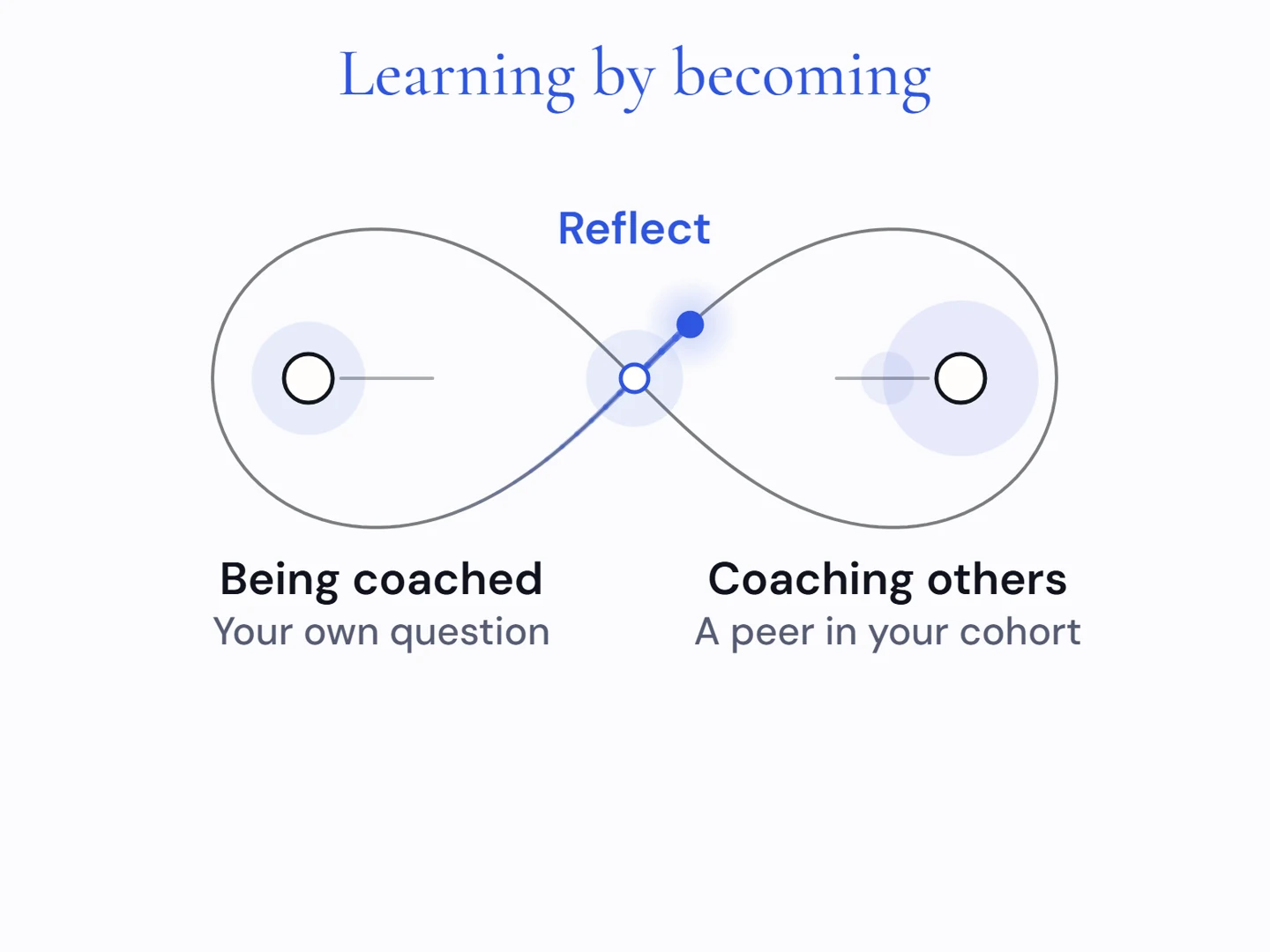
You will learn the method from both sides of the coaching conversation. You bring real questions from your own life and work, experience being coached, and practice coaching others in your cohort.
We call this learning by becoming. As you examine your own assumptions and reactions, you begin to recognize what it takes to help someone else do the same. Faculty demonstrations and focused exercises give you ways to listen, question, and respond; repeated practice helps you make them your own.
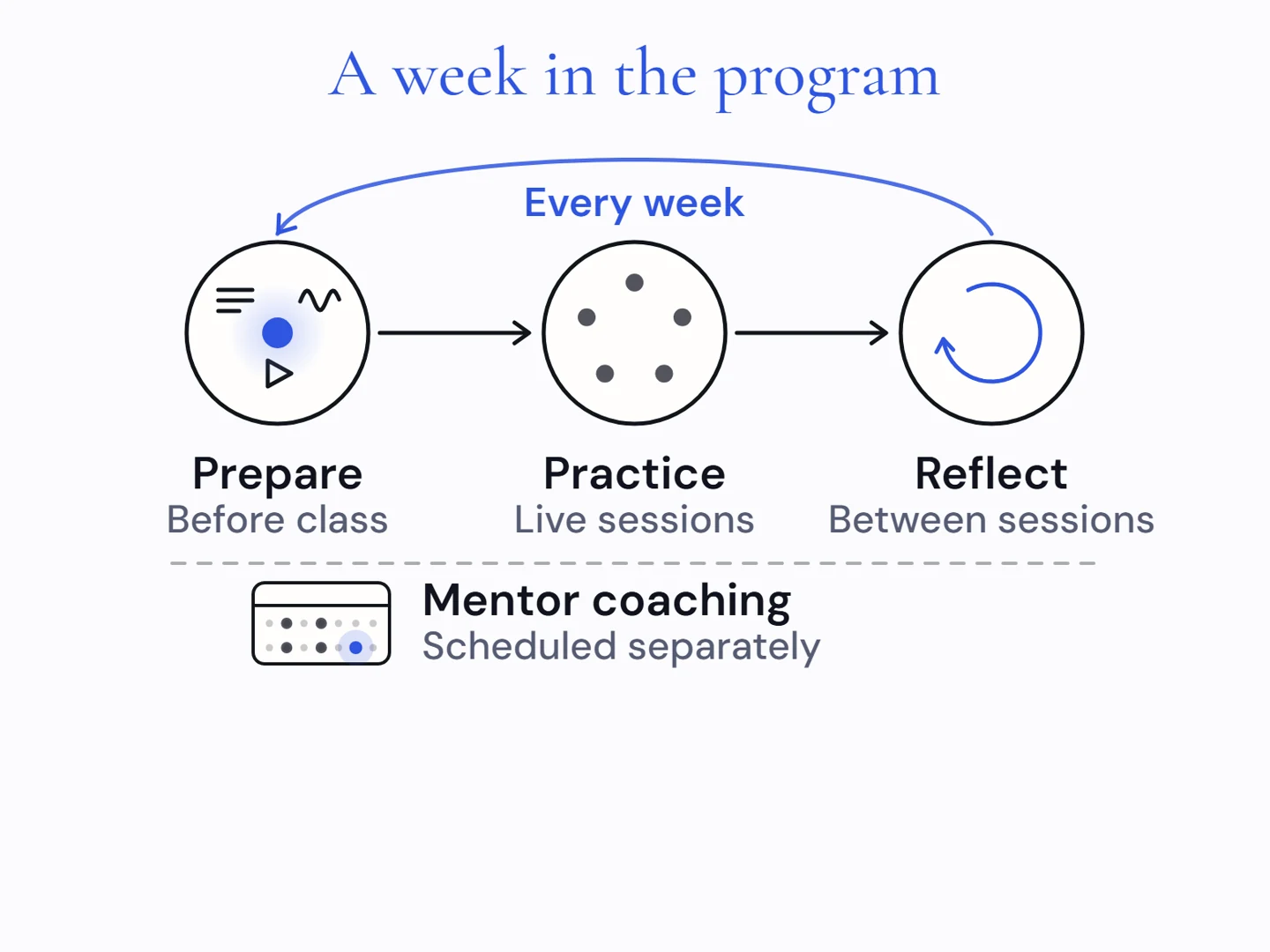
Explore the Claristrat MethodThe program combines live online sessions with preparation you complete in your own time. You encounter the ideas before class, bring your questions with you, and spend live time exploring how to use them.
1 to 4 hours a week, on your own time
Work through the core material using readings, audio, and video, with further reading available when you want to explore a topic more deeply.
Two live sessions a week, 2.5 hours each
Discuss questions with faculty, observe demonstrations, and practice specific coaching skills or fuller conversations with peers. The balance changes as the program progresses.
Your own practice and review
Reflect on your practice and notice where the same patterns appear in your work. As you progress, make time for coaching outside the classroom and for reviewing what you learn.
Scheduled separately
Mentor coaching is scheduled separately from regular classes. Your total commitment therefore includes preparation, live attendance, mentoring, and any coaching you undertake outside class.
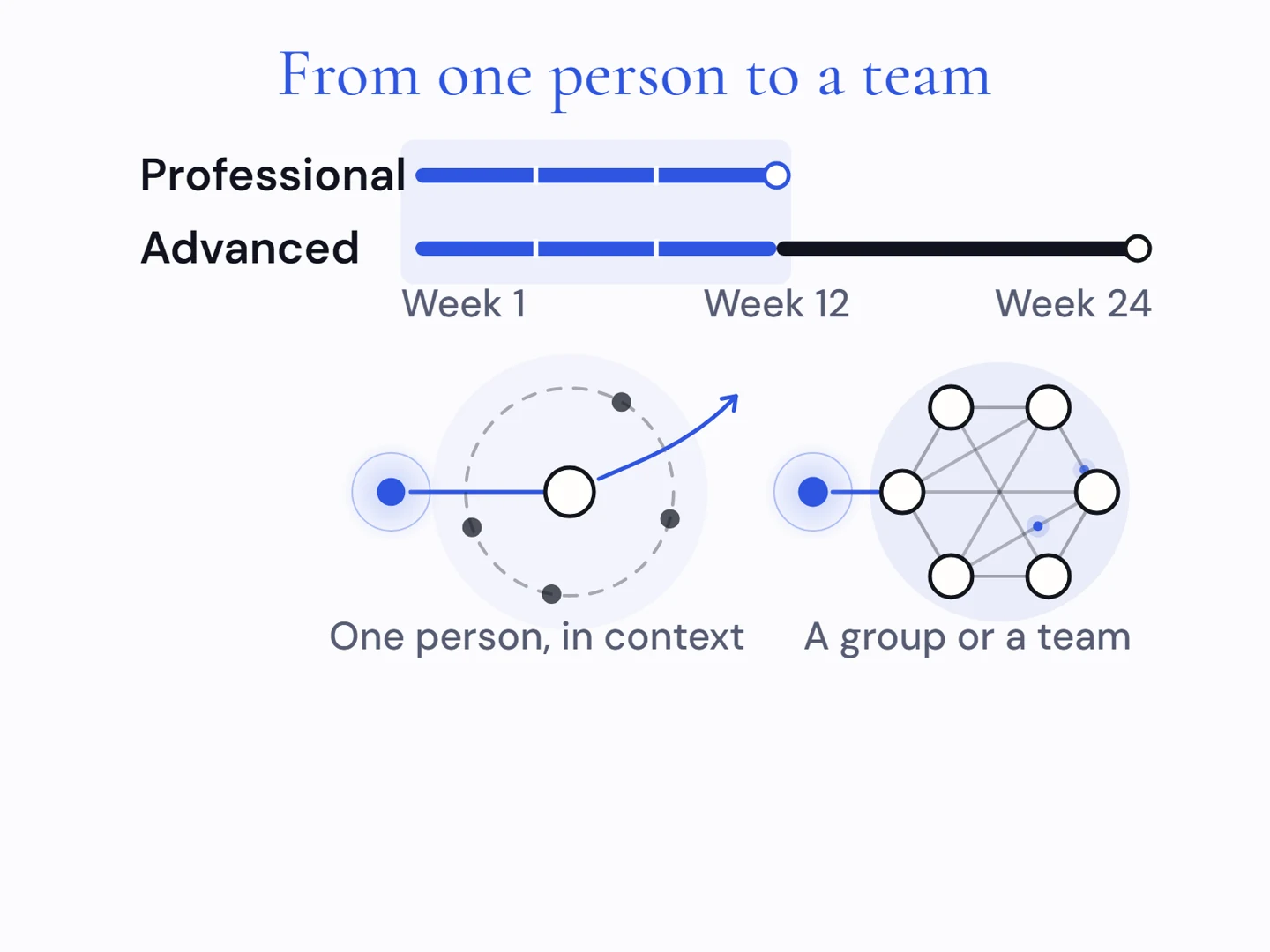
On the Advanced Certificate, the two live sessions run 2 hours each from week 13.
You receive feedback on what you actually do in a coaching conversation: how you establish an agreement, listen, follow the client’s thinking, and help them turn awareness into action.
Focused practice lets you work on one part of a session at a time, such as asking a question without directing the answer or allowing a silence to continue.
Observed coaching brings those skills together. You coach a peer, receive feedback, and return to practice with something specific to work on.
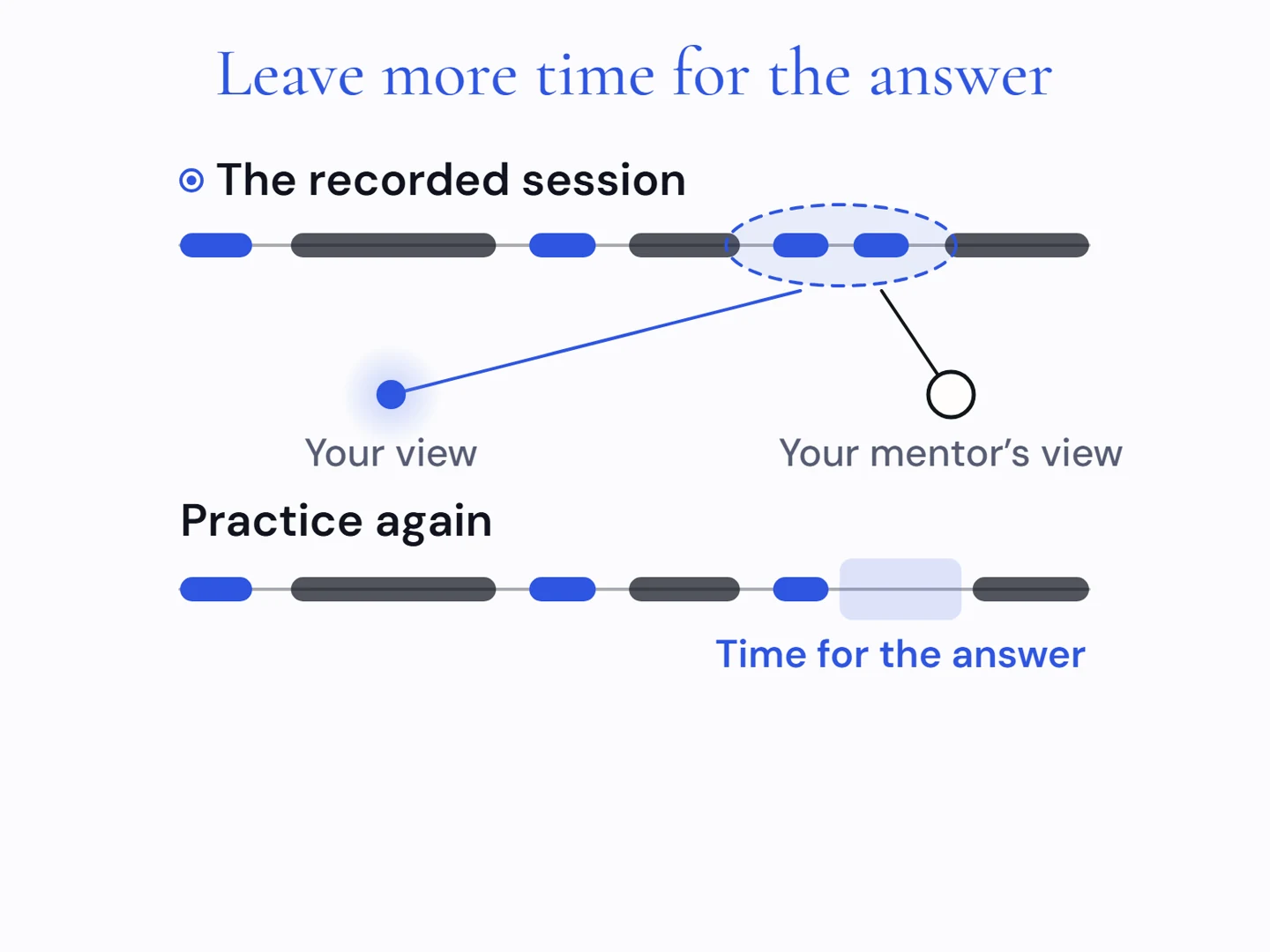
Mentor coaching gives you a structured opportunity to examine your work against coaching competencies. For individual mentoring, you and your mentor review a recorded client session before discussing what you each noticed.
10 hours of mentor coaching
7 in a group,3 one to one
These are additional to classroom practice; group mentoring includes learning by observing and discussing others’ coaching as well as your own.
Both pathways begin with the same twelve-week foundation. You learn to coach one person in the context of their relationships, responsibilities, and wider organization. The Advanced pathway continues into group and team coaching, where several perspectives and patterns interact at once.
Both programs
Weeks 1–4 · Intentional Awareness
Explore coaching ethics, agreements, trust, listening, and presence. Begin noticing your own assumptions and the signals that matter in a conversation.
Weeks 5–8 · Dynamic Meaning
Practice mapping the person and their situation, asking questions that reveal relationships, and helping clients examine the assumptions shaping their choices.
Weeks 9–12 · Iterative Transformation
Help clients explore possibilities, connect decisions with their values, and design small actions they can test. Bring the parts of a coaching conversation together and prepare to develop your practice.
Advanced only
Weeks 13–24 · Advanced Certificate
Deepen your coaching practice while learning to work with group dynamics, team roles, productive disagreement, and collective decision-making.
These are teaching weeks; cohort calendars show breaks and scheduled dates. Practice and mentoring also contribute to your development beyond the taught sequence.
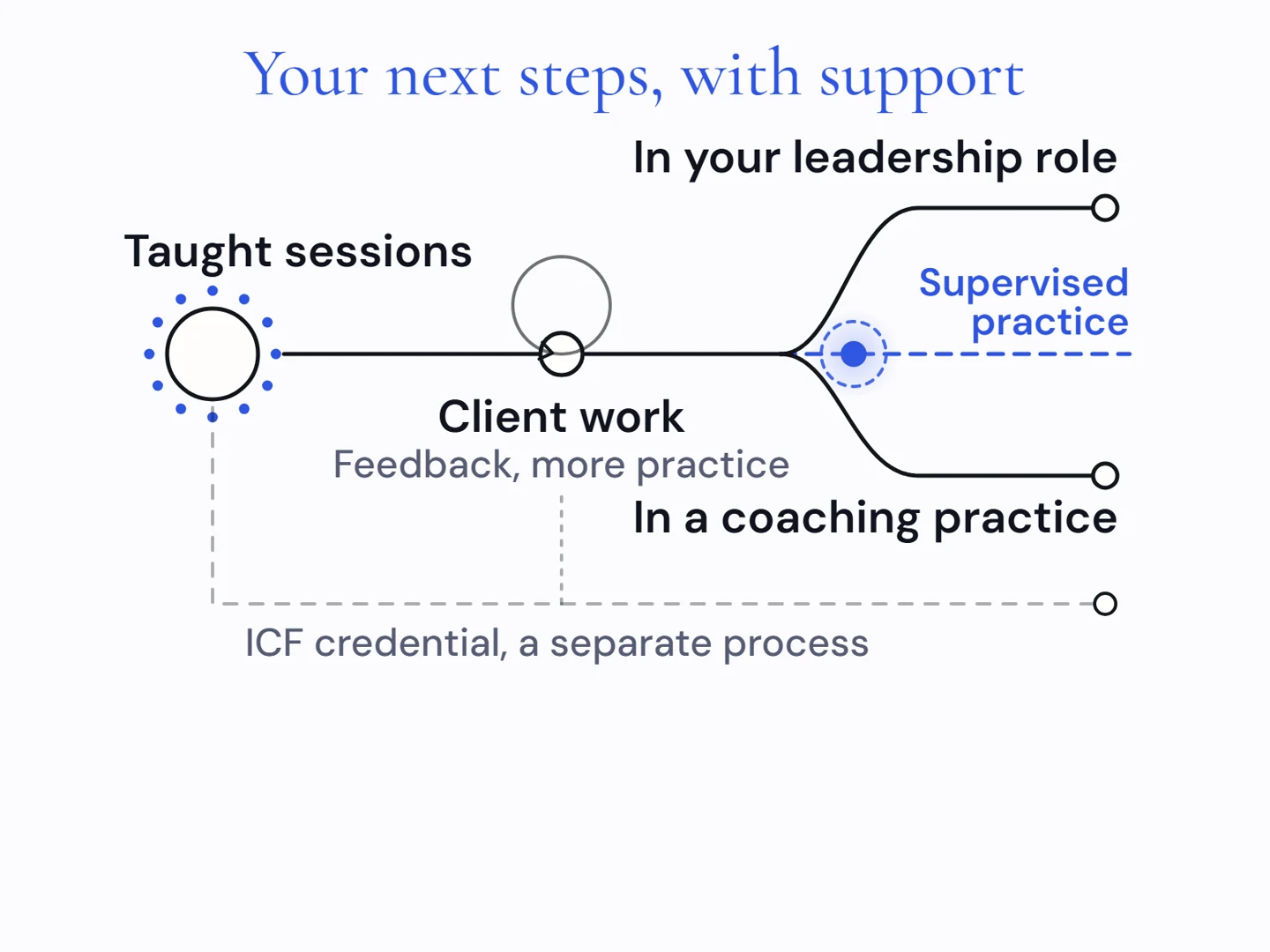
Compare Professional and AdvancedYou continue developing through coaching real clients, reviewing your work, and applying feedback. The practicum gives you time to consolidate what you have learned beyond the pace of weekly classes.
The program provides a year of supervised practice support after the course. For participants building a coaching practice, monthly sales coaching offers support with the practical work of developing the business, alongside preparation of your professional materials.
You may use what you learn in your existing leadership role, build an independent practice, or combine the two. Your next steps depend on the work you want to do and the experience you bring.
Understand the ICF pathwayJoin an information session to explore the approach, discuss the commitment, and ask faculty about the pathway that fits your experience and intentions.