
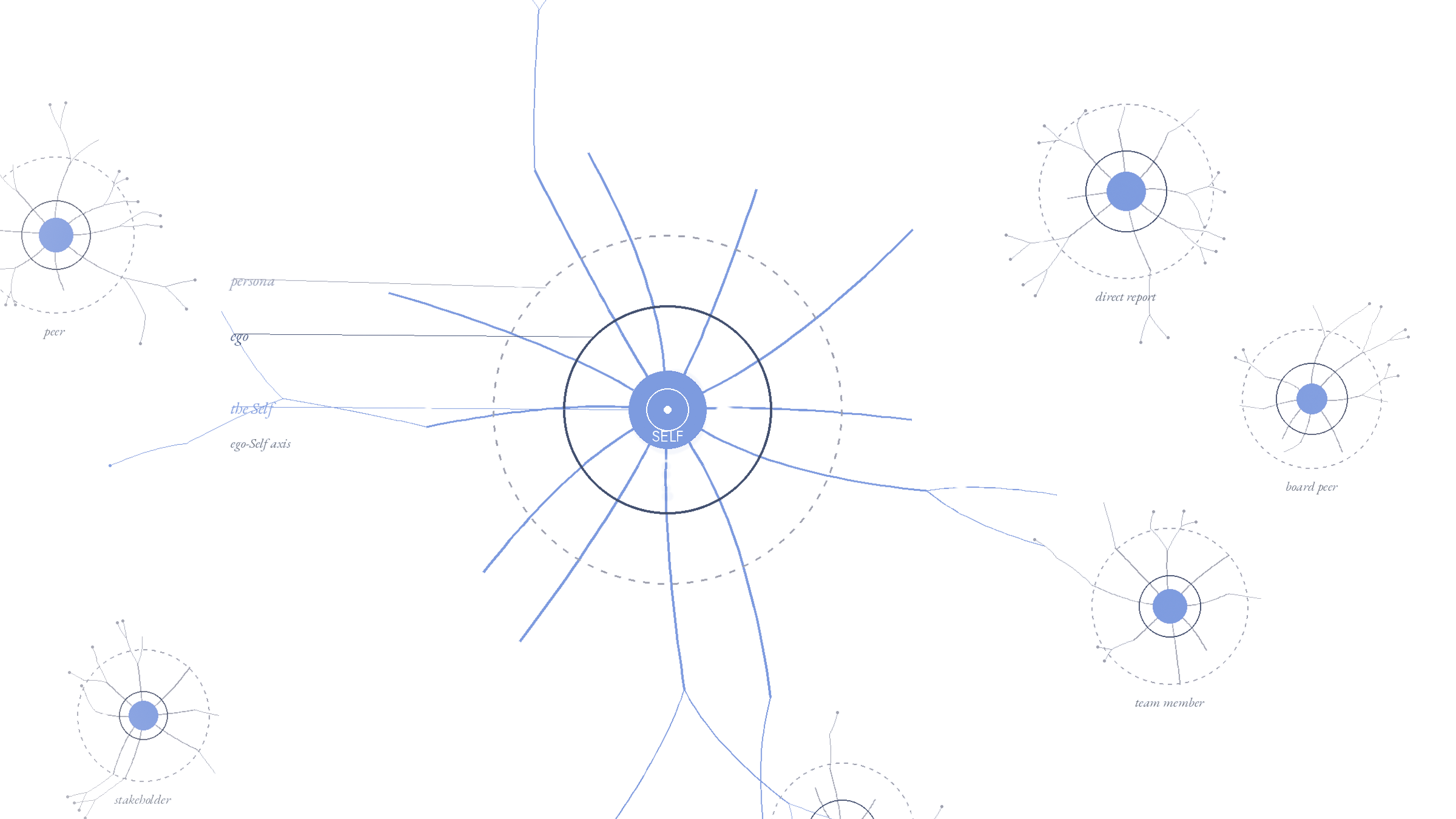
THE CLARISTRAT METHOD™ FOR EXECUTIVE AND TEAM COACHING
You cannot take them there
if you haven’t gone yourself.
The Claristrat method™ integrates scientific approaches in a practical system for adult development. It is built on complexity theory, systems thinking, adult development theory, depth psychology, and the latest neuroscience. All structured around the ICF Competencies.
WHAT MAKES CLARISTRAT DIFFERENTFour scientific lineages,
Integrated for development.
Most leadership development draws on behavioral traditions ineffective for lasting change. The Claristrat Method integrates four leading edge, proven scientific approaches that deliver it. Each does work the others cannot.
Complexity you can work with
Some senior situations don’t have a best practice solution: the right one does not exist in advance. Most coaching treat this unpredictability as an issue. We see it as a domain with action steps.
Snowden’s Cynefin lineage Depth beneath behavior
The patterns a senior leader operates from are usually what they cannot describe, because they are looking from them. Behavioral coaching cannot reach this layer. Depth psychology can.
Jungian lineageDevelopment, not type-profiling
Senior roles ask for the capacity to hold complexity, competing truths, and one's own contribution to the mess, all at once. Subject-object theory is the most useful account of how that capacity is built.
Kegan lineageThe body under load
Senior coaching happens under pressure, and the leader's nervous system is doing things they cannot narrate. A coach without nervous system literacy will coach the talk and miss the work.
Porges & Feldman-Barret lineagesa methodical approach built for TANGIBLE RESULTS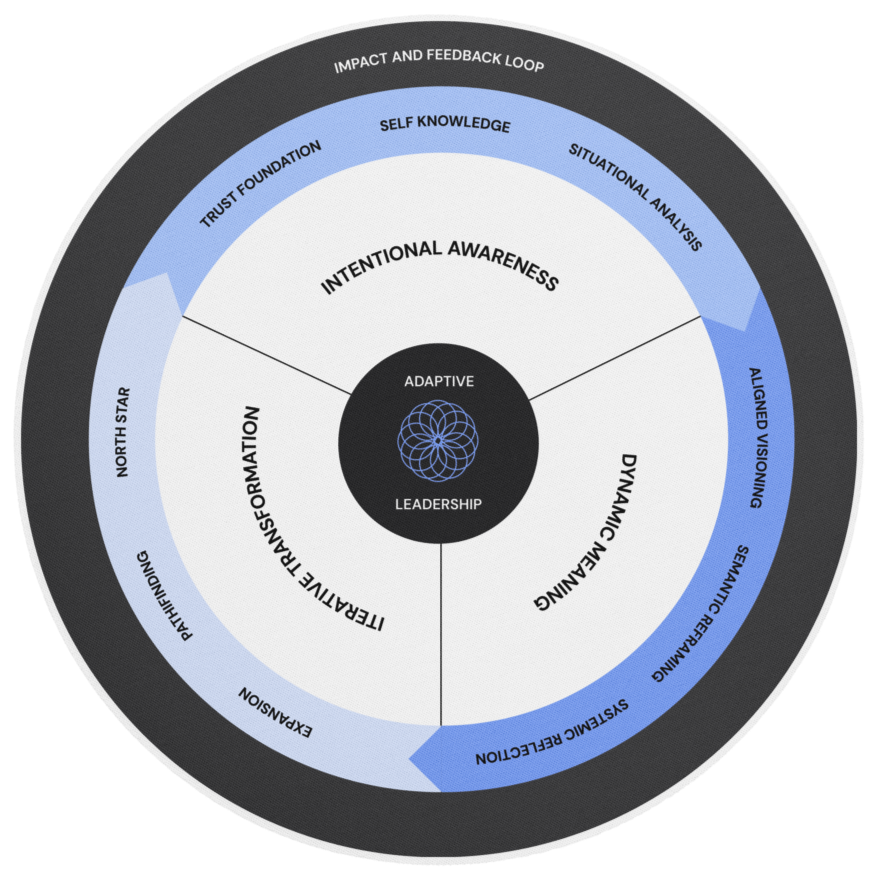
-
Gravitas cannot be scripted; it is the natural byproduct of internal maturity. Most leadership breakthroughs stall not from a lack of skillset or drive, but because an executive has reached the absolute edge of their current meaning-making capacity.
By integrating depth psychology with adult development, Claristrat coaches can help leader’s expand their internal range. The method equips you with the vocabulary and keys to decode unconscious organizational drivers, loosen internal blocks, and revitalize progress when complexity threatens to paralyze execution.
-
Complexity science builds the literacy required to read the executive and the organizational context as a single, co-created system. Instead of reacting to surface behavioral signals, this lens tracks the operational patterns running across entire enterprise architectures.
With it, Claristrat coaches can systemically map the contradictions in leadership motivations, the friction between what an organization rewards versus what it actually requires, and the fluid laws of change within human systems. This diagnostic fluency allows you to see past the presenting symptom and isolate the exact complexity levers bottlenecking the enterprise.
-
Navigating high-stakes organizational complexity requires an unshakeable physiological baseline. Operating at the intersection of somatic regulation and advanced neuroscience, this pillar focuses on steadying the nervous system under intense corporate pressure.
True presence and systemic authority cannot be faked; they are biological expressions of a regulated physiology. The method trains you to anchor a somatic state of safety, emotional clarity, and relational power, allowing you to sit comfortably in the face of executive chaos and hold the space for aligned meaning to emerge.

THE ARCHITECTURE OF HUMAN DEVELOPMENT
Three phases.
A growth loop.
Geometrical scaling.
Intentional Awareness. Dynamic Meaning. Iterative Transformation.
Each phase diverges and converges to capture the key elements of growth.
They are the pillars of the Claristrat Method™, the arc of each program, each client engagement, and each leadership development session.
The whole cycle lives inside different scales. Each session is a rehearsal of the developmental process the leader is building as a muscle. Until they can run it without the coach.
I
Reading the system
beneath the
presenting problem.
The presenting problem is rarely the real one. A conflict looks like a personality clash. A bottleneck reads as poor execution. An underperforming team is diagnosed as a capability gap. Intervening before the real pattern is visible solves the wrong problem with misleading confidence.
This phase builds the discipline to look beneath the surface: at the external system of incentives, stakeholders, and dynamics, and at the internal landscape of assumptions and patterns shaping how a leader reads it. Students develop this perception on themselves first. A coach who has never been held in genuine Intentional Awareness cannot hold it for a client. In learning to see clearly in others, you sharpen the same lens in yourself.
PHASE 01 · SESSION OPENING
Intentional
Awareness

IN A SESSION · IN THE PROGRAM · IN ACTION
A CFO arrives with a clear diagnosis: "My team can't execute without me in the room." The opening of the session builds enough safety and precision to surface what is actually being described.
Over multiple sessions, the pattern is traced across three different teams, eight years. The variable isn't the team. This is where the real work begins.
II
Expanding range
without leading the answer.
Executives act on their interpretation of events, not the events themselves. When those interpretations are fixed, the options they generate are fixed too. The middle of the session (and the middle of developmental work) is where those interpretations are opened, tested, and expanded.
Done well, the reframe feels like the other's own discovery. Done poorly, the coach's agenda stalls the team or client’s development. The method makes that distinction explicit and trains the discipline to stay on the right side of it. This is the most demanding capability to build. The one that produces resilient, durable change. Leaders who develop it find their own thinking becomes more fluid. The spiral raises the collective, including themselves.
PHASE 02 · SESSION MIDDLE
Dynamic
Meaning
IN A SESSION · IN THE PROGRAM · IN ACTION
The CFO's team dependency reframes: not a delegation failure, but an identity transition. The shift from expert who executes to leader who builds others' capacity.
Once operational, their intervention changes entirely. A single session can start this movement. Further ones deepen and accelerate the process.
III
Anchoring change that holds
beyond the supporting moment.
The close of each session — optionality, next steps, forward commitment — is a microcosm of the whole developmental arc. The client leaves not with instructions but with a direction they have chosen, tested against their values, and made specific enough to act on. This is the structure that prevents reversion.
The length of joint growth work depends on the client and the integration they are seeking. A single conversation can start a genuine internal reorganization. A sustained engagement builds the capability as a permanent muscle. Either way, the goal is the same: a leader who can run the process for themselves, without the coach, and eventually for others.
PHASE 03 · SESSION CLOSE
Iterative
Transformation
IN A SESSION · IN THE PROGRAM · IN ACTION
The coach anchors the reframe: What does leading from a sponsor identity look like in the next board meeting? In next week's one-to-ones? Specific. Testable. Owned by the client.
Six months later it is the new baseline: because it was built into identity, not rehearsed as a technique.
HOW TO APPLYFour steps to
Your executive coach certification
1. Apply to a cohort
At the cohorts page, pick your dates and fill up the checkout form with the required application information. Your seat will be held throughout the acceptance process.
2. Map your personal path
You will complete the Hogan Series and have a dedicated session with faculty to explore how your go-to leadership behaviors, values, and motivations map to your coaching pathway and goals. With a plan to ensure the program addresses your core strengths and edges.
3. Get accepted
We’ll book a 30-minute conversation to discuss your goals for the program. If cohort placement is not optimal, your payment is refunded in full.
4. Begin the work
Regardless of when your cohort starts, you’ll get fast-tracked access to the asynchronous lessons and program materials so you cover those at your pace. You’ll also receive calendar invitations for the upcoming live sessions.
NOT SURE IF THis IS RIGHT FOR YOU?Attend a Masterclass
to see it in action.
Learn in 60 minutes how to turn executive experience into a real coaching practice, without starting over.
Or watch the method work on a real leadership question. The easiest way to get a feel for how we teach.
TO THINK IT FURTHERNot ready to choose?
Speak with us.
